Salon SEO: How to Get Your Salon to Show Up on Google in 2026
Last updated: July 13, 2026 · By Ryan Smeltz, US Army veteran & founder
Last updated: May 4, 2026 · 8 min read · By Ryan Smeltz, Founder of Secret Optimizer
TL;DR
- Salon SEO is photo-first. A salon with 100+ before/after photos outranks one with the same review count and weak imagery.
- Build service-specific landing pages (balayage, color correction, blowouts, etc.) instead of one generic Services page.
- Pinterest is underrated for salons — a single well-tagged pin can drive traffic for years.
The 60-second answer
To get your salon to show up on Google in 2026, three things drive almost all of it: (1) a fully optimized Google Business Profile with 50+ reviews and weekly photo posts showing real client work, (2) a website with separate service pages for each high-intent service (“Balayage in Raleigh, NC”, “Color Correction in Cary, NC”, “Brazilian Blowout in Durham, NC”), and (3) consistent Instagram and Pinterest posting tagged with your location, since Google cross-references social signals for visual-heavy categories like beauty. Most Triangle salons get the first part wrong by under-investing in GBP photos.
Why salons are a special case in local SEO
Three things make beauty different:
- Google ranks visual-quality signals heavily for beauty queries. A salon with 100 high-quality before/after photos outranks a salon with the same number of reviews and 5 stock photos.
- Service-specific search intent is intense. “Balayage Raleigh” is a different shopper than “men’s haircut Raleigh” — and they need different landing pages, photos, and pricing transparency.
- Stylist-level brand matters. Many clients follow a specific stylist, not the salon. Stylist personal brand pages on the salon site (with their own portfolio + booking link) drive significant search traffic.
Step 1: GBP that actually shows your work
The salon GBP playbook is photo-first. Specifics:
- 100+ photos within first 6 months: before/after, individual stylists, the space, products you carry
- Add 3-5 new photos per week — Google heavily weights freshness for beauty
- Tick every relevant service category (haircut, color, balayage, highlights, blowout, extensions, men’s services, etc.) with realistic prices
- Hours that match reality including stylist-specific availability if you offer it
- Q&A section pre-populated with 10+ FAQs you wrote yourself (“Do you take walk-ins?”, “How long does a balayage take?”, “Do you do color corrections from box dye?”)
- Weekly GBP posts: a transformation, a stylist spotlight, a product recommendation
Step 2: Service-specific landing pages
Stop sending all traffic to a generic “Services” page. Build pages for the 8-12 highest-intent services for your salon. Each page should include: realistic price range, time required, before/after photos from your salon (not stock), what to expect at the appointment, what makes your salon’s version different, and FAQ schema with 5-8 Q&As.
Step 3: Instagram + Pinterest — the visual moat
For beauty businesses, social isn’t optional. The 80/20 of social for salons:
- Instagram: 3-5 posts per week, all geotagged. Reels of transformations get 3-5x the reach of static posts.
- Pinterest: Underrated for salons. Long-tail visual search where “balayage Raleigh” or “wedding hair Cary” can drive traffic for years off a single pin.
- TikTok (optional): If you have one stylist who likes being on camera, TikTok can be a serious growth channel. If not, skip — half-hearted TikTok hurts more than helps.
Step 4: The reviews multiplier
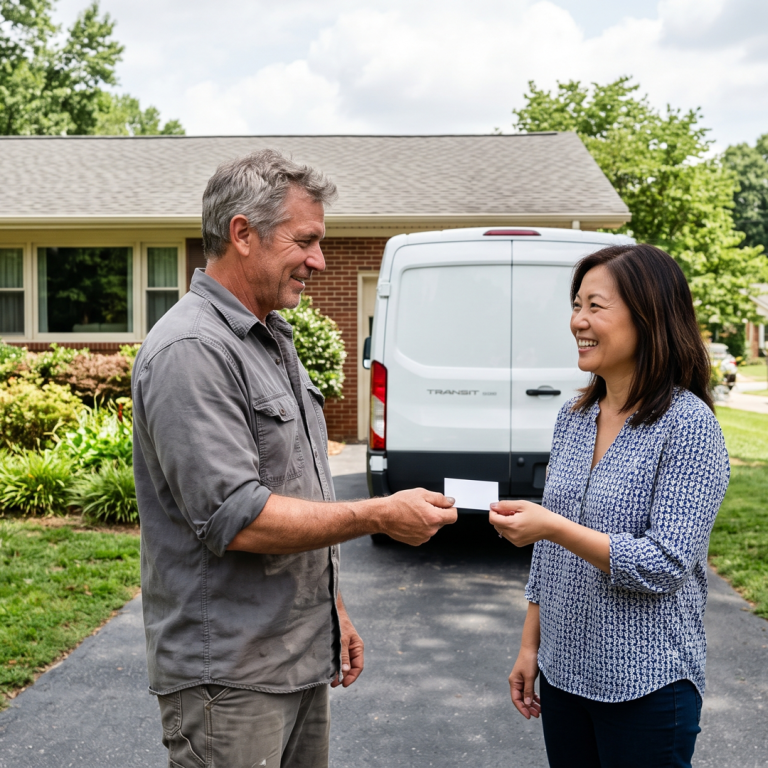
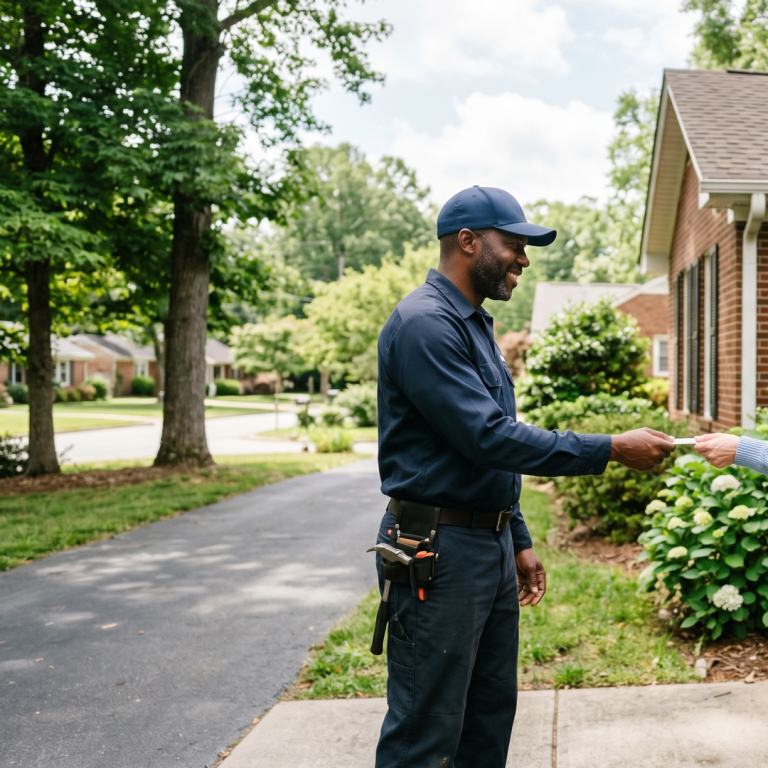
Salon reviews convert at unusually high rates because clients are evaluating based on photos in reviews more than text. Encourage clients to attach a photo. The system: at the end of every appointment, the stylist hands a card with the QR code and says “If you love it, would you mind posting a quick review with a photo? It really helps me build my book.” That sentence converts at 30-50%.
Step 5: Show up in AI search
Beauty queries are increasingly going to ChatGPT and Perplexity (“best balayage salon in Raleigh”, “where can I get a Brazilian blowout near me”). Make sure your robots.txt allows AI crawlers, your service pages have FAQPage schema, and your stylist bios have credentials and named authors. Free AI search audit here.
Realistic budget for a Triangle salon
- SEO + content (us): $1,500-$4,500/month
- Social content (in-house with phone, scheduled via Later or Buffer): $20-$50/month
- Booking software (Vagaro, Boulevard, Square Appointments): $50-$300/month
- Optional paid social ads: $300-$1,500/month
Most independent Triangle salons run $400-$1,500/month all-in on marketing including software. Lock in lifetime Founding Member pricing if you’d like us to handle the SEO + content side.
Frequently asked questions
How important is Instagram vs Google for a salon?
Both — but Google drives first-time appointment bookings while Instagram drives client retention and brand-building. Most new clients find a salon via Google search, then validate via Instagram before booking.
Should each stylist have their own page on the salon website?
For higher-end salons where clients follow specific stylists, yes. Each stylist page should include their portfolio, specialties, schedule, and direct booking link. This drives significant long-tail search traffic.
How many Google reviews does a salon need?
Top-ranked Triangle salons average 100-300 Google reviews. New salons should target 50+ in year 1. Reviews with photos count significantly more than text-only reviews for beauty businesses.
Is Pinterest still worth it for salons in 2026?
Yes, more than ever. Pinterest functions as a long-tail visual search engine. A single well-titled, well-tagged pin of a balayage from your salon can drive traffic for 2-3 years. Most Triangle salon competitors are not investing in Pinterest, so the opportunity is wide open.
What's the highest-converting social content for a salon?
Reels of color transformations (30-60 seconds, before/during/after) consistently outperform every other format. Add captions, geotag, use 3-5 relevant hashtags, post at peak local hours (7-9 PM weekdays).
Want us to run this audit on your site?
Free, instant, 12 checks. No credit card. No call. Just a real audit you can act on.
About the author
Ryan Smeltz is the founder of Secret Optimizer. He spent 10 years in the U.S. Army as a Military Policeman (31B), including a deployment to Iraq during Operation Iraqi Freedom (2007–2009), and the past 10+ years in sales and marketing — most recently as a marketer at two local agencies in the Triangle. Born in Lancaster, PA. Raised in Mebane, NC. Lives in Zebulon. Every Secret Optimizer blog post is human-edited; AI assists with research and drafts but never with strategy or claims about results.
Want this done for you?
We have a vertical-specific playbook for salon seo — everything we’d do for your business, mapped out specifically for your industry.
Want this as a step-by-step guide?
A day-by-day plan for the next 30 days: what to fix, in what order, and how to tell it worked. Built for an owner with an hour a day, not an agency retainer.
30-Day Local SEO Plan — $27 See all guides
Written by a veteran-owned agency in Zebulon, NC. Instant download, no subscription.