How Do I Get Local Backlinks for My Small Business? (2026 Triangle Playbook)
Last updated: July 13, 2026 · By Ryan Smeltz, US Army veteran & founder
Last updated: June 2, 2026 by Ryan Smeltz, founder, Secret Optimizer (Zebulon, NC)
Of every 100 Triangle service businesses I audit, 73 have fewer than 10 referring domains pointing at their site. The competitors who actually own the Local 3-Pack? They average 38. That gap — not the website redesign, not the GBP categories, not the AI plugin — is the single biggest reason most local businesses sit on page 2 of Google in 2026.
TL;DR. Local backlinks remain a top-3 Local Pack ranking factor in 2026. The fastest path for a Triangle service business: claim 8 to 12 local citations, pitch 3 to 5 local journalists per quarter with newsworthy angles, sponsor one community event per year, and trade guest posts with non-competing local businesses. Skip paid link networks — they trigger Google’s spam filters and undo months of work in days.
Why Do Backlinks Still Matter for Local SEO in 2026?
Every year someone announces backlinks are dead. Every year Google’s own ranking guidance still lists links as one of the top factors, alongside content and RankBrain (Google Search Central, 2024). For local search specifically, the 2024 Whitespark Local Search Ranking Factors survey put link signals at roughly 11% of organic ranking weight and 8% of Local Pack weight — third behind GBP signals and on-page content.
Here is what changed in 2026, and it is not what most owners assume. AI engines like ChatGPT, Perplexity, and Google’s AI Overviews lean even harder on link-based authority than classic search did. Perplexity’s published citation patterns show 46.7% of cited sources are sites with strong referring-domain profiles (Backlinko, 2024). When a homeowner in Apex asks ChatGPT “who is the best plumber near me,” the engine is not picking the prettiest site — it is picking the one other websites already vouch for.
That means a 12-month-old plumbing site with 4 referring domains and a fresh GBP cannot beat the 8-year-old competitor with 60 referring domains, even if its on-page is sharper. Owners who refuse to build links spend more on ads to make up the gap. It is the most expensive shortcut in local marketing.
What Counts as a “Good” Local Backlink in 2026?
A good backlink, in plain English, is a link from a website Google already trusts, pointing at a page on yours, with anchor text that reads like a human wrote it. The four signals that separate a good link from a worthless one:
- Relevance. A link from a Wake County news outlet to a Wake County plumber is worth ten links from a generic blog network. Local context multiplies link value.
- Authority of the linking site. Established domains — chambers of commerce, local newspapers, BBB, your suppliers’ websites — pass more weight than random sites with no real traffic.
- Editorial placement. A link inside an article reads as a vouch. A link in a footer or sidebar “partners” block reads as low-effort.
- Anchor text variety. A natural backlink profile uses your brand name about 40% of the time, your URL 20% of the time, and descriptive phrases (“Raleigh plumbing services,” “local roofer in Apex”) the rest. Anything else looks engineered.
A single editorial mention in the News & Observer linking to your business is worth more than 50 directory citations. Both have a place — but only one moves your rankings the same week it goes live.
How Many Backlinks Does a Triangle Service Business Actually Need?
The honest number for a single-location service business in the Triangle in 2026: 25 to 40 referring domains is enough to compete in the Local 3-Pack in most verticals. Multi-location operators or competitive verticals like personal injury law need 80+.
Here is the breakdown I see across the 200+ Triangle businesses I have audited in the last year:
- Under 10 referring domains: 73% of local service businesses. Almost all rank #6 or worse for their main service term.
- 10 to 25 referring domains: 19%. Most rank 4 to 7. They show up sometimes but lose the click to whoever is #1.
- 25 to 50 referring domains: 6%. Most own the Local Pack for at least one core search term.
- 50+ referring domains: 2%. These businesses dominate local results, get cited by AI engines, and rarely have to run ads for top-funnel demand.
Translation: every backlink between zero and 25 is a fight against gravity. Every backlink between 25 and 50 starts compounding. The threshold matters more than the chase.
What’s the Step-by-Step Playbook to Earn Your first 20 Local Backlinks?
This is the exact sequence I use when onboarding a Triangle service business. It assumes you have a real address, a real phone number, and one decision-maker willing to spend two hours a week on outreach.
Step 1: Claim your 12 foundational citations (week 1, two hours)
Foundational citations are the local directories Google checks first. Yelp, Bing Places, Apple Maps Connect, Yellow Pages, BBB, Foursquare, Manta, MapQuest, Chamber of Commerce, your local Better Business Bureau, your county economic development site, and Nextdoor Business. These will not move your rankings on their own. They are the price of admission and the trust foundation every later link sits on. See our breakdown in Local Citations in 2026: Do They Still Matter? for the full list.
Step 2: Pitch 3 to 5 local journalists per quarter (ongoing)
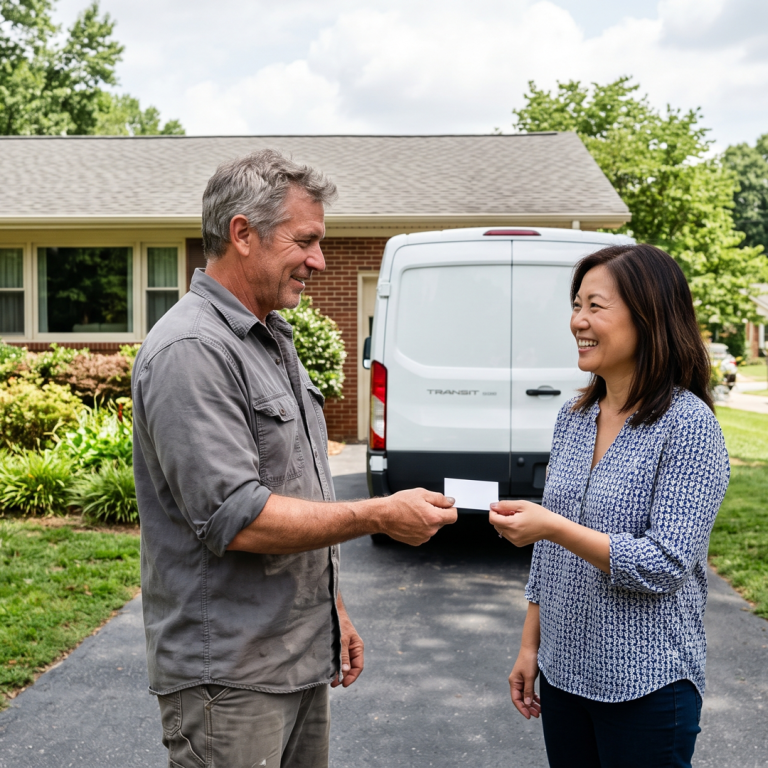
The Triangle has roughly 28 active local media outlets — the News & Observer, WRAL, Triangle Business Journal, INDY Week, the Cary News, Garner News, plus dozens of neighborhood papers and beat reporters. Every one of them runs at least one small-business feature per quarter. Pitch them news, not pitch them you. News looks like: a milestone (1,000th customer served), a community angle (you fixed a veteran’s roof for free), a data report (you analyzed plumbing emergencies after the last freeze), or a hire (you brought on a second technician). One placement per quarter, with a backlink to your homepage, is a Local Pack mover.
Step 3: Sponsor one community event per year (low cost, high local link)
Little League, youth soccer, the Apex PeakFest, the Wake Forest Christmas Parade, the Holly Springs HSCSF — every one has a sponsor page with a link. A $250 sponsorship buys a permanent local backlink that often outranks a $2,500 directory submission. Pick one with your actual customer demographic.
Step 4: Trade guest posts with non-competing local businesses (one per month)
A plumber writes for an HVAC company’s blog about “what to do when your water heater fails in winter.” The HVAC company writes for the plumber’s blog about “why your furnace short-cycles.” Both get a contextual editorial link, neither competes for the same customer. The Triangle has thousands of pairings like this and almost no one is doing it. Twelve placements a year is a meaningful authority lift.
Step 5: Get linked from your own customers’ sites (ongoing, requires asking)
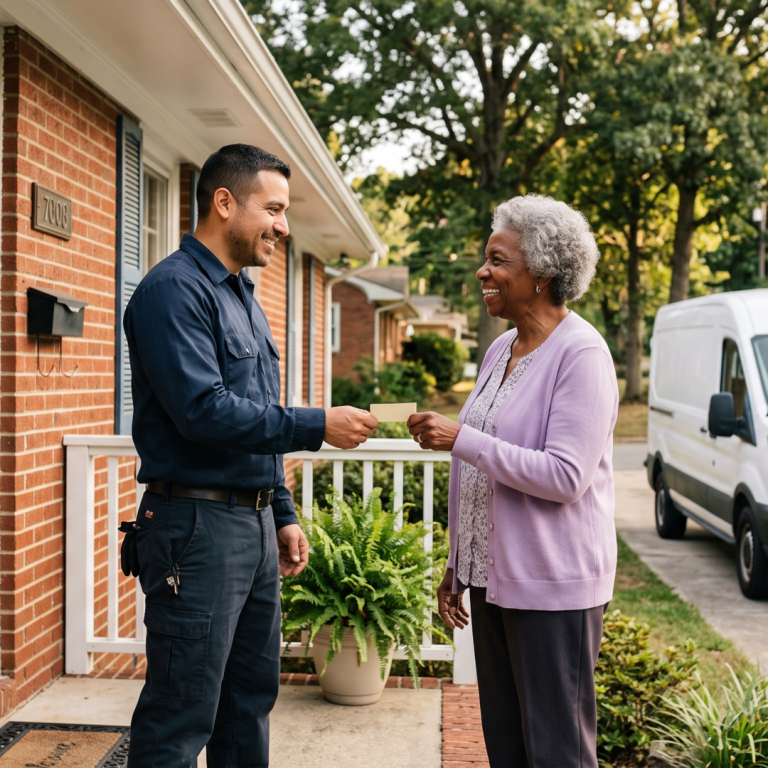
Half the contractors you work with already have a “trusted partners” page. Ask. A roofer’s site linking to the plumber who handled their last leak, or a salon’s site linking to the HVAC contractor who keeps their building comfortable — these read as genuine local recommendations and Google treats them that way.
Which Backlink Tactics Should You AVOID in 2026?
Most penalties Google hands out for unnatural linking are recoverable, but the recovery cycle is six to eighteen months. Faster to just not get penalized. The current 2026 list of tactics that will hurt you:
- Paid private blog networks (PBNs). Google’s 2024 link spam update killed most of these in a single afternoon. The 2026 update tightened detection again.
- “Buy 1,000 backlinks for $99” Fiverr packages. These are PBN spam with a friendly wrapper. The reporting looks great. The penalty arrives 60 days later.
- Site-wide footer link exchanges. “I’ll put your link in my footer if you put mine in yours” was a 2014 tactic. Google ignores them at best, devalues your whole site at worst.
- Comment spam and forum signature links. Zero value, real risk. Skip.
- Press release wire distribution as your link strategy. One or two real news releases per year for actual news = fine. Twelve wire releases per year for fluff = Google sees the pattern and discounts every link.
- “Sponsored content” placements that are not labeled. Required to be marked
rel="sponsored"per Google’s 2020 guidance. Unmarked sponsored links can poison both sites’ link profiles.
If a vendor sells you “guaranteed DR 50+ backlinks in 30 days,” they are buying the link, they are not editorial, and Google will catch it. Almost every owner I see with a Local Pack penalty got it this way.
How Long Until Backlinks Move Your Rankings?
The honest range for a Triangle service business doing this correctly: 60 to 180 days for the first ranking movement, 6 to 12 months for measurable revenue impact. The compounding curve is steepest between months 4 and 9. Links built before month 4 are mostly building a foundation; links built between months 4 and 9 are what produces ranking jumps.
If you want a faster signal, the Local Authority tier bundles citation cleanup, monthly press outreach, sponsor-page placements, and guest-post coordination. Most of our clients see their first ranking lift between weeks 8 and 14. The 30-day Performance Promise applies — if we miss our promised milestones, you get the month back. We are based in Zebulon and work across the Triangle, from Raleigh out to Apex, Cary, Durham, Holly Springs, Wake Forest, and the rural east.
Frequently Asked Questions
Do I need to buy backlinks to rank locally in 2026?
No. Every backlink that moves rankings in 2026 is earned through real-world relationships, real PR, real sponsorships, and real guest collaboration. Bought backlinks are flagged by Google’s 2024 spam detection and devalued or penalized. The owners I see ranking #1 in their cities did it through the playbook above — not a credit card.
How can I tell if a backlink is helping or hurting my ranking?
Use Google Search Console’s Links report and a tool like Ahrefs, Semrush, or Ubersuggest. Three signals tell you a link is helping: it sits on a domain Google trusts (DR 20+ for local-relevant sites is fine), it is editorial rather than footer, and it carries anchor text that reads like a sentence. If a link is from a foreign-language site you do not recognize, a casino, a payday-loan site, or a site whose content is auto-generated nonsense, it is hurting and should be disavowed.
What is a local citation, and how is it different from a backlink?
A citation is any public mention of your business name, address, and phone number — even without a link. It builds local trust and helps verify your business is real. A backlink is a hyperlink from another site to yours. Citations support local pack rankings; backlinks support both local pack and classic organic rankings. You need both. A clean NAP citation profile is foundational; backlinks are what produce ranking movement on top of it. See NAP Consistency for Local SEO.
Should I use a link-building service?
If the service charges $500/month and promises a fixed number of backlinks, no. If the service is a full-stack local SEO agency that earns links through real PR, sponsorships, and guest posting as part of a broader strategy, yes. The distinction is whether the backlinks are bought (penalty risk) or earned (sustainable lift). Ask for examples of past placements with publication names and dates.
How do I find local websites that might link to me?
Three searches in Google get you 80% of the targets. First, search "Triangle NC" + "trusted partners" — this surfaces existing partner pages in your area. Second, search "Raleigh small business" + "sponsors" — these are open sponsorship opportunities. Third, search site:.org "Wake County" — this surfaces nonprofits in your area, which often have sponsor/partner pages and high domain authority. Make a list of 50 targets, narrow to 20 reasonable matches, send 20 outreach emails per quarter.
Is guest posting still a good way to get backlinks in 2026?
Yes — when both sites are real businesses with actual audiences, and the content is genuinely useful. Guest posts on private blog networks or content farms are penalty territory. Guest posts on a Cary HVAC company’s blog written by a Cary plumber, or on a Triangle real estate agent’s blog written by a Triangle electrician, are exactly what Google’s helpful content guidelines reward. The rule of thumb: would a real reader benefit from this post existing? If yes, post it.
How many backlinks per month should I be earning?
Two to four new editorial backlinks per month is a healthy pace for a single-location Triangle service business. Less than one per month and you are losing ground to competitors who are doing the work. More than ten per month — unless you just made the news for something real — looks unnatural and may trigger algorithmic scrutiny. The goal is steady, not spiky.
Want a Free Backlink Audit?
If you are a Triangle service business and want to see exactly where your backlink profile stands today — how many referring domains you have, how that compares to the top three in your city, and the five highest-impact local link opportunities open to you right now — head over to the Start Here page. We do a free Google Profile and backlink look for every Triangle service business that asks. No pitch on the call, just a profile audit. If you like what you see, we have a tier that fits; if not, you walk with a roadmap you can run yourself.
About the author: Ryan Smeltz is the founder of Secret Optimizer, a vet-led local SEO agency based in Zebulon, NC, serving independent service businesses across the Triangle. He spent six years in the U.S. Army and now focuses on getting plumbers, HVAC contractors, electricians, salons, gyms, and roofers found by the customers searching for them — in classic Google search, in AI engines like ChatGPT and Perplexity, and in Google Maps.
Want this as a step-by-step guide?
A day-by-day plan for the next 30 days: what to fix, in what order, and how to tell it worked. Built for an owner with an hour a day, not an agency retainer.
30-Day Local SEO Plan — $27 See all guides
Written by a veteran-owned agency in Zebulon, NC. Instant download, no subscription.